What Does Maine’s Applicator License Mean When Hiring?
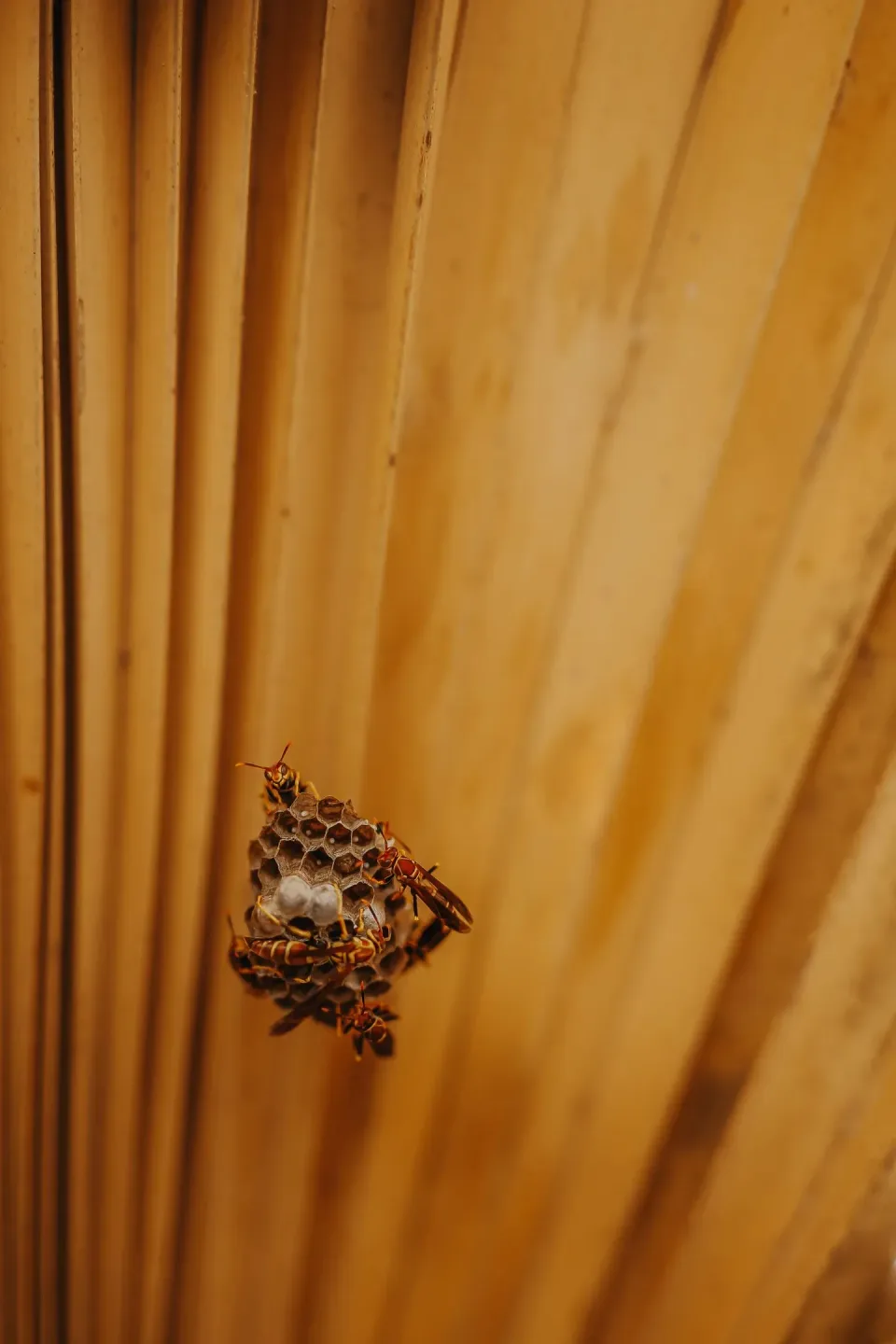
If wasps are entering through a porch-roof gap, ask who will assess the nest and whether the work requires a Maine pesticide applicator license. Maine licensing under 22 M.R.S. § 1471-D sets requirements for covered pesticide work; it does not replace your responsibility to ask what will be applied and how the treatment will be handled. A clear explanation matters before anyone begins.
-
Confirm the worker: Ask whether the person doing the pesticide work holds the applicable Maine credential.
-
Ask about the treatment: Request the product name and a plain-language explanation of the planned application.
-
Check the directions: The pesticide label gives product-specific application and re-entry instructions.
-
Discuss the property: Point out the nest, access limits, and nearby people or pets before work is planned.
A customer who reports a bald-faced hornet nest about six feet up a tree should avoid disturbing it and describe its exact location when arranging an assessment. A request to “nip it in the bud” is a reason to ask what action is appropriate now, not to assume an early or improvised pesticide application is safe. Near the Maine Maritime Museum in Bath, as elsewhere in Maine, we explain the proposed work before treatment.
What does 22 M.R.S. § 1471-D tell you?
When scratching sounds come from bedroom walls, the sound alone does not identify the animal or show what treatment is needed. Ask the provider to inspect, identify the pest, and explain whether the planned pesticide work falls under Maine’s licensing requirements. Section 1471-D concerns pesticide applicator licensing; it is a hiring check, not a promise that every pest problem has the same treatment. We document evidence and treatment locations so recommendations are tied to what we find rather than guesses.
Licensing also does not make label directions optional. Federal Insecticide, Fungicide, and Rodenticide Act requirements govern pesticide-label compliance, including use consistent with the product’s directions.
At Maine Medical Center in Portland, the stakes of explaining work around an occupied building are easy to understand: residents need to know what is planned and what instructions apply before re-entry. Ask for those details in advance.
Which credentials and records should you ask about?
Ask who will perform the work, what Maine credential applies to that work, and whether the provider can explain the treatment in terms you can follow. Commercial pesticide work may require certification; the precise requirement depends on the work being performed. A professional should not use a credential as a substitute for a careful inspection or clear estimate.
Ask what evidence was found and where treatment is proposed. Inspection records should document pest evidence and treatment locations, giving you a useful reference if activity continues or follow-up is recommended.
Our crew explains the source we identify and the steps we recommend. In Lewiston, someone comparing providers near Bates College can use the same practical questions as a homeowner anywhere in Maine: who is responsible for application, what will be used, and what will be recorded?
Why does Maine’s short summer season affect planning?
Short summer seasons concentrate outdoor pest activity, so a sudden burst of insect activity may make scheduling and a timely inspection important. That does not mean every sighting calls for pesticide treatment. At the Maine Mall in South Portland, a business or nearby property manager should still ask the applicator to identify the pest and define the treatment area rather than treating broadly by assumption.
Season matters indoors, too. Cold, snowy winters increase indoor rodent activity, so scratching or fresh evidence inside a home deserves an inspection that looks for entry routes as well as activity.
At the University of Maine in Orono, the winter pattern is a reminder that a seasonal change can move a problem inside; a calendar date alone cannot determine the correct treatment. We look for evidence first and explain whether control, prevention, or further monitoring makes sense.
When should you DIY or call a licensed professional?
A homeowner can safely note where pests appear, photograph accessible evidence, and reduce obvious food or water sources. Do not apply a pesticide unless its label allows that use and you can follow all directions. Call a professional when the pest is uncertain, activity is inside a wall or another hard-to-reach space, or the proposed work involves commercial pesticide application.
At Bowdoin College in Brunswick, as in any occupied property, the important distinction is between observing a problem and applying a pesticide. An inspection can establish what is present and where it is active; treatment decisions follow that evidence.
If you are comparing options, our guide to hiring for Maine pesticide applicator licensing explains the questions to raise. We also describe our inspection-first approach on the Maine Pest Solutions about page.
How Do Maine’s State House Hiring Checks Compare?
Choose the service approach based on the pest evidence, property, and whether the work involves pesticide application; a label and an inspection both matter. In Augusta, questions about a provider can be grounded in the same careful documentation expected around the Maine State House: know what work is proposed and who will perform it.
Leaf litter can shelter ticks and overwintering pests, so a property with accumulated debris may need inspection before anyone proposes treatment. Nor’easters can bring heavy snow, wind, and outages; exterior stations or other equipment may need checking after severe weather.
Salt air can corrode exterior equipment, making the condition of coastal placements worth including in a service review.
| Option | Best for | Key detail |
|---|---|---|
| One-time treatment | A defined, current pest issue | Inspection and identified treatment area |
| Recurring residential plan | Ongoing monitoring needs | Confirm visit frequency and records |
| Commercial pest management | Occupied business properties | Ask who performs pesticide work |
| Rodent exclusion service | Known access points | Compare exclusion with indoor trapping |
| Exterior foundation treatment | A justified exterior treatment | Confirm product directions and placement |
How Do You Prepare for a Licensed Applicator Visit?
If construction is underway and a contractor needs the work area cleared to continue, tell the pest provider about the schedule and the affected location before agreeing to treatment. If a mouse problem is present, describe the signs and rooms involved rather than asking for a pesticide application before inspection. At Bath Iron Works, planning around active work areas is an obvious practical concern; the same principle helps homeowners coordinate access and treatment safely.
-
Confirm the visit: Verify the appointment, property address, and who is expected to perform the work.
-
Describe the evidence: Share pest sightings, affected rooms, and access to attic or basement areas.
-
Raise household concerns: Ask how children, pets, allergies, and sensitive equipment affect preparation.
-
Prepare the site: Clear stored items from treatment areas and store food or utensils if interior work is planned.
-
Check directions: Ask which product-label re-entry instructions apply after application.
-
Plan follow-up: Find out whether monitoring is recommended and keep stations accessible for inspection.
Coastal storms can damage siding and roofline entry points, so mention any visible exterior damage during the inspection. For a property near Acadia National Park on Mount Desert Island, access and exposed building areas may shape what the technician can inspect. Check that the provider has explained the proposed work, the relevant label directions, and any follow-up before the visit ends.
When Should You Ask Maine Pest Solutions About Licensing?
A Maine pesticide applicator license is one important hiring check, but the useful conversation also covers inspection findings, proposed work, and the directions that apply to any pesticide used. If mice are turning up as temperatures fall, do not wait for the problem to spread through the house before describing the evidence and asking for an inspection. Near the Eastern Promenade in Portland, the same questions apply as anywhere we serve: who will do the work, what supports the recommendation, and what should occupants know afterward.
We explain our findings and recommendations before treatment. For help with a pest concern, contact Maine Pest Solutions to discuss an inspection and next steps. Bring the location, sightings, and any access constraints; that gives our crew a practical starting point.